


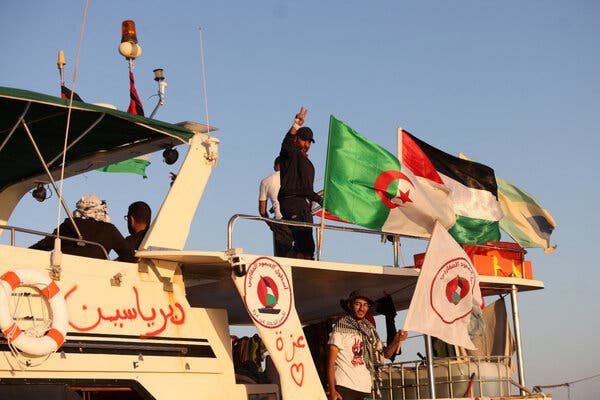
FootyExperts.com – The recent interception of an aid flotilla headed to Gaza by Israeli forces, a significant geopolitical event, might seem far removed from the world of professional football. However, as expert soccer journalists, we understand that the beautiful game is rarely immune to the broader socio-political currents that shape our world, especially in regions as complex and passionate about football as the Middle East. Such incidents, while not directly on the pitch, can send ripple effects through the entire sporting ecosystem, impacting everything from player morale to league logistics and even international perception.
The immediate aftermath of such an event often sees heightened tensions, which can directly affect the safety and security protocols for sporting events. Leagues in the region, already navigating a challenging environment, might face increased scrutiny or even the need to postpone matches to ensure the safety of players, staff, and fans. The psychological toll on athletes, many of whom hail from or have strong ties to the affected areas, cannot be underestimated. Their focus, often razor-sharp on the game, can be fractured by concerns for their families, communities, and the overall stability of their homeland. This can manifest in performance dips, a lack of concentration, or even a reluctance to participate if they feel their presence is inappropriate given the circumstances.
Furthermore, the incident could influence the movement of players and staff. International players considering moves to clubs in the region might reconsider, weighing the political stability against their career aspirations. Similarly, scouting networks and youth development programs, crucial for nurturing future talent, could face disruptions. Travel restrictions, increased border controls, and general unease can hinder the free flow of talent and expertise, stunting the growth of football at its grassroots. The long-term implications for youth academies, which rely on a stable environment to identify and train young prospects, are particularly concerning. A generation of potential stars could find their pathways to professional football obstructed by circumstances beyond their control.
Also Read
Financially, such events can also deter potential sponsors and investors who might view the region as too volatile. Football clubs, like any other enterprise, depend on a steady stream of revenue to operate, sign players, and maintain infrastructure. A perceived increase in risk can lead to a withdrawal of investment, impacting the financial health of clubs and potentially leading to a decline in the quality of play. Moreover, the image of football in the region on the international stage can be affected. While football is often seen as a unifying force, geopolitical events can sometimes overshadow the sporting achievements, leading to a narrative that focuses more on conflict than on competition.
The passionate fan bases across the Middle East are also deeply affected. Football is more than just a game; it’s a cultural cornerstone, a source of identity and collective joy. When communities are under stress, the ability to gather and celebrate their teams can be curtailed, impacting social cohesion. Stadium attendance might drop, and the vibrant atmosphere that defines Middle Eastern football could be dampened. While football often provides an escape from daily hardships, severe geopolitical events can make that escape impossible, forcing the sport to confront the harsh realities of the world.
In conclusion, while the interception of an aid flotilla is a political event, its tendrils inevitably reach into the fabric of society, including the sporting world. For an expert soccer journalist, it’s crucial to acknowledge these broader impacts, understanding that the beautiful game, in its essence, is a reflection of the human experience. The hope remains that stability and peace will prevail, allowing football to continue its role as a source of unity, joy, and aspiration for all.
Featured Image Source: www.nytimes.com