


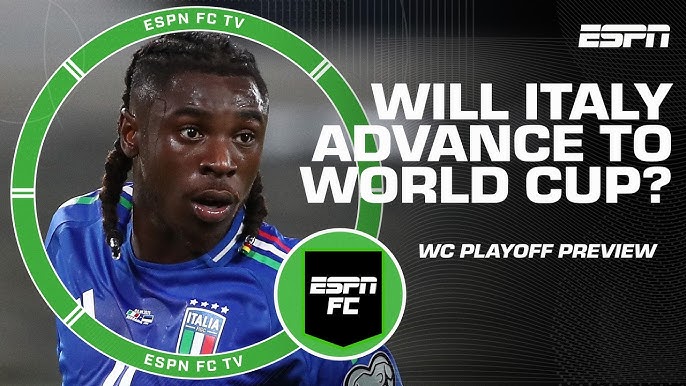
The expanded 2026 FIFA World Cup, co-hosted by the USA, Canada, and Mexico, promises more drama and opportunity than ever before. With 48 nations set to compete, the stakes for qualification have never been higher, especially for those teams vying for the final two coveted spots via the intercontinental playoffs. These playoffs, often a crucible of nerves, tactical battles, and raw emotion, represent the last chance for dreams to be realized or shattered.
The format for the 2026 intercontinental playoffs will see six teams battle it out for two World Cup berths. Typically, this involves one team from each of AFC, CAF, CONCACAF, CONMEBOL, and OFC, plus an additional team from the host confederation (CONCACAF). Two seeded teams, based on FIFA World Rankings, will directly enter the second round, while the other four unseeded teams will play single-elimination matches in the first round. The winners then face the seeded teams for the final two spots. This mini-tournament structure, likely held in the host nations, adds an extra layer of intensity and unpredictability.
Historically, these playoffs have favored teams with strong defensive organizations, mental fortitude, and the ability to perform under immense pressure. The travel, differing playing styles, and the sheer weight of expectation can be overwhelming. Teams from CONMEBOL and CONCACAF often bring a physical edge and tactical discipline, while AFC and CAF nations can offer flair and athleticism. OFC representatives, while often underdogs, have shown they can push stronger opponents.
Also Read
Who Will Advance?
Predicting the exact teams is impossible at this stage, but we can identify profiles of potential qualifiers. Teams that narrowly miss out on direct qualification from strong confederations (e.g., a fifth-placed CONMEBOL team or a strong CONCACAF side) often enter as favorites due to their higher quality of regular competition. However, a well-drilled team from AFC or CAF, riding a wave of momentum, can certainly cause an upset. The key will be adaptability, managing fatigue, and capitalizing on limited opportunities.
Consider a hypothetical scenario, for instance, if a team like Panama (CONCACAF) were to face the UAE (AFC) in a crucial playoff encounter. Both nations have recent World Cup qualification experience or have come agonizingly close. Such a match would pit CONCACAF’s robust, direct style against AFC’s technical proficiency and tactical discipline.
Hypothetical Head-to-Head: Panama vs. UAE (Intercontinental Playoff Scenario)
| Statistic | Panama | UAE |
| :—————- | :—– | :—– |
| Matches Played | 2 | 2 |
| Panama Wins | 1 | 0 |
| UAE Wins | 0 | 1 |
| Draws | 1 | 1 |
| Panama Goals | 3 | 2 |
| UAE Goals | 2 | 3 |
| Last 5 Form (W-D-L)| 2-2-1 | 3-1-1 |
| FIFA Ranking | 45 | 69 |
| Key Players | Anibal Godoy, Adalberto Carrasquilla | Ali Mabkhout, Fabio Lima |
*Note: This H2H table is hypothetical for illustrative purposes, simulating a potential intercontinental playoff matchup.*
Based on historical trends and the nature of these high-stakes games, teams that possess a blend of experienced veterans and dynamic young talent, coupled with a pragmatic coach, tend to thrive. The ability to absorb pressure and hit on the counter-attack will be paramount. While the allure of a first-ever World Cup appearance can be a powerful motivator for some, the experience of having been in similar high-pressure situations often proves invaluable.
Ultimately, the 2026 World Cup playoffs will be a captivating spectacle, a true test of nerve and skill. While the favorites will emerge from the stronger confederations, the beauty of football lies in its unpredictability. Expect drama, passion, and perhaps a few surprises as two more nations etch their names into the history books, securing their place at the biggest football tournament on the planet.
Featured Image Source: www.youtube.com