


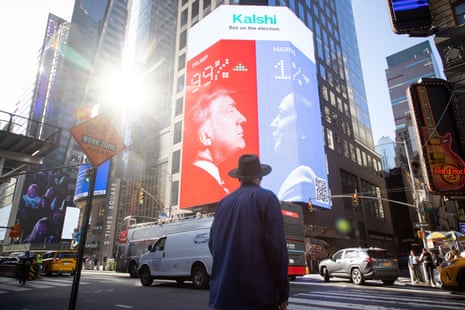
FootyExperts.com – An exclusive report has sent ripples through the sports world, revealing a new Senate bill poised to ban prediction markets across sports, politics, and military affairs. For football enthusiasts and the burgeoning industry built around fan engagement and strategic forecasting, this legislative move could represent a seismic shift in how supporters interact with the beautiful game. While traditional sports betting has long been a staple, prediction markets offer a distinct, often more nuanced, form of engagement, allowing participants to bet on the likelihood of specific events rather than just match outcomes.
The proposed bill, still in its early stages, aims to outlaw these markets entirely. For soccer, this means an end to platforms where fans might predict everything from a specific player’s goal tally in a season, the exact minute of a red card, or even the likelihood of a manager being sacked before Christmas. These markets, often lauded for their ability to aggregate collective intelligence and provide real-time insights into public sentiment, have carved out a niche alongside conventional bookmakers. Their appeal lies in their dynamic nature and the intellectual challenge they present, moving beyond simple win/loss scenarios to intricate event-based forecasting.
The implications for the football community are vast. Firstly, it removes a popular avenue for fan participation. Many supporters engage with prediction markets not just for financial gain, but for the added layer of excitement and strategic thinking they bring to watching matches. The ability to test one’s footballing acumen against a broader market adds a competitive edge that traditional betting doesn’t always capture. Losing this outlet could lead to a decrease in certain forms of fan engagement, particularly among those who enjoy the analytical aspect of the sport.
Also Read
Secondly, the bill raises questions about the future of innovation in sports tech. The past decade has seen an explosion of platforms designed to enhance the fan experience, with prediction markets being a significant part of this evolution. A blanket ban could stifle further development in this area, potentially pushing innovation underground or to less regulated international markets. This could also impact data analytics companies that leverage prediction market data for insights into public perception and event probabilities, which are often used by media outlets and even clubs themselves.
Critics of prediction markets often cite concerns about market manipulation, integrity, and the potential for gambling addiction. Proponents, however, argue that these markets, when properly regulated, can be transparent and even serve as valuable tools for forecasting. They also highlight the distinction between prediction markets and traditional gambling, suggesting that the former often involves a greater degree of skill and information processing. The Senate bill, however, appears to take a broad-brush approach, lumping all such markets together regardless of their specific mechanics or regulatory frameworks.
From a soccer journalist’s perspective, this bill presents a fascinating, albeit concerning, development. Our role is to cover all facets of the game, and fan interaction, including betting and prediction, is undeniably a significant part of modern football culture. Should this bill pass, it would necessitate a re-evaluation of how we discuss fan engagement, the economics of sports, and the legal landscape surrounding it. It could also lead to a surge in interest in fantasy football and other skill-based games as fans seek alternative outlets for their predictive instincts.
Ultimately, the Senate’s move to ban prediction markets on sports, politics, and military affairs is a complex issue with far-reaching consequences. For football fans, it means potentially saying goodbye to a unique form of engagement that has added depth and excitement to their passion. As the bill progresses, FootyExperts.com will continue to monitor its development and provide in-depth analysis on what this could mean for the future of football and its global fanbase.
Featured Image Source: www.theguardian.com